Why does this happen though?
Most of the answer lies in the wingtips. Wings generate lift by the pressure difference on the top and bottom of the wings. At the wing tips, rather than following the flow around the wing’s profile, the air goes over the tips, which reduces the pressure difference between the top and bottom of the wing in the region near the tip, thus reducing the lift. This can be seen in Figure 4 for both the original wing and the longer wing. These wing tip vortex losses are present in all wings (although modern planes reduce these by adding winglets), however they are more pronounced in shorter wings.
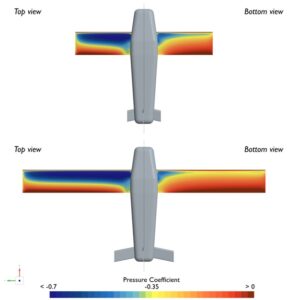
Figure 4: Pressure coefficient Top and Bottom for both the original and longer wing
The lift force distribution over the wings is shown for the three configurations in Figure 5. The effect of the fuselage and wingtips on the wings is clearly visible.
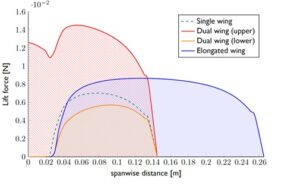
Figure 5: Spanwise Lift distributions for the three configurations
Figure 7 to Figure 9 shows the pressure distribution for the different simulations, taken at different spanwise sections of the wing (see Figure 6).
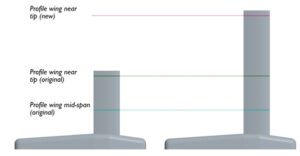
Figure 6: Section locations for the original and elongated wing
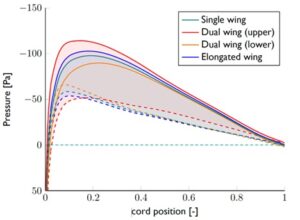
Figure 7: Pressure profiles mid span for the different wings
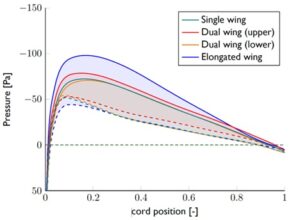
Figure 8 Pressure profiles at the original wing tip location for the different wings
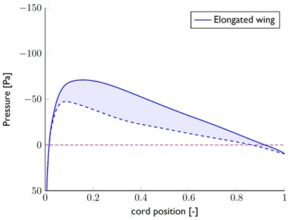
Figure 9 Pressure profiles at the elongated wing tip location