

From assumption to assurance: Why simulation is no longer optional
A product can meet every internal requirement, yet still fail in reality.

A product can meet every internal requirement, yet still fail in reality.
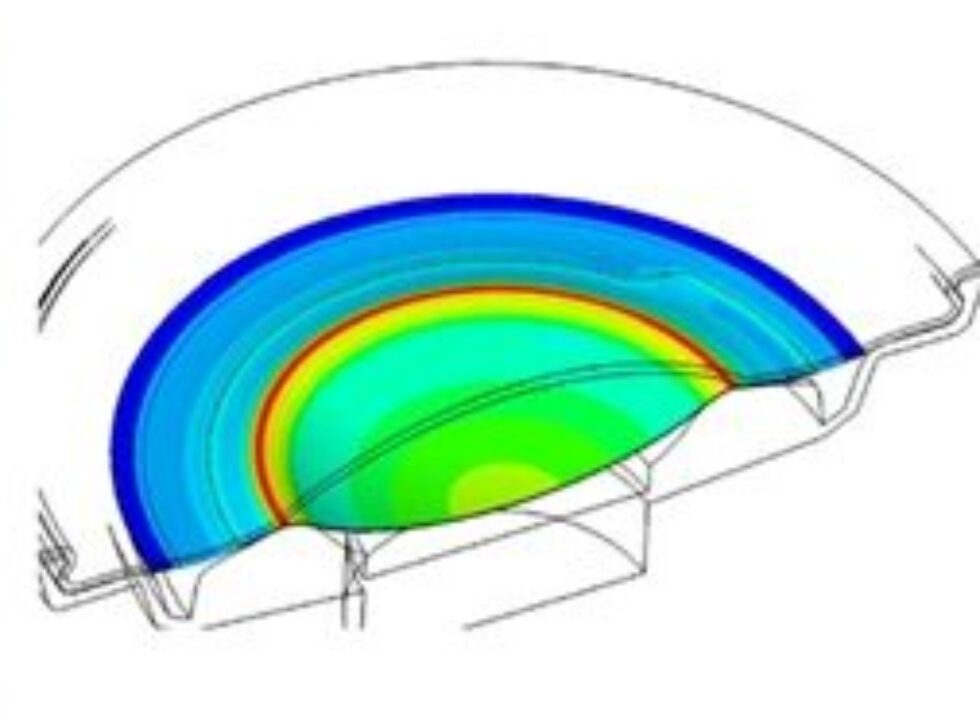

A coffee capsule fails to rupture at the intended pressure, affecting product performance and user experience. A data centre develops unexpected hotspots due to suboptimal airflow design, leading to increased energy consumption, reduced equipment lifespan, and potential service disruption. These situations are rarely caused by a lack of engineering capability. More often, they result from decisions made on an incomplete understanding of complex physical behaviour.
In many development processes, validation still happens late, after designs are fixed, prototypes are built, and timelines are under pressure. At that stage, identifying a flaw is no longer purely a technical matter. It directly impacts cost, delivery commitments, and customer trust.
The core issue is not whether problems will occur, but when they will surface and how much they will cost to resolve.
Design, testing, and refinement remain fundamental to engineering. However, as systems become more complex, relying primarily on physical development cycles is no longer sufficient to support efficient and informed decision-making.
Physical prototyping is inherently time-consuming and costly, and testing often occurs too late to influence fundamental design choices. At the same time, critical phenomena, such as fluid flow, thermal behaviour, or non-linear material response cannot be reliably predicted through intuition or simplified rules.
As a result, teams are forced to make decisions based on assumptions, historical experience, or conservative margins. This does not eliminate uncertainty; it merely postpones or overcorrects for it. By the time issues are identified, the cost and effort required to resolve them have increased significantly.
Introducing simulation earlier addresses these limitations directly, enabling teams to evaluate design behaviour before physical prototypes are built and reducing the need for late-stage corrections.
Planning to optimize a design? Let us help you certify it with confidence.
If the limitations are well understood, why is simulation not yet fully embedded in every engineering workflow?
The reasons are rarely technical. Simulation is still often perceived as complex, resource-intensive, or reserved for specialised use cases. In addition, many organisations have established processes centred around physical validation, making it difficult to shift towards a more predictive approach.
Equally important is how simulation is positioned internally. When treated as a final validation step rather than a design tool, its impact is inherently limited. This perception prevents organisations from realising its full value, not as an additional layer, but as a fundamental part of how engineering decisions are made.
The absence of simulation does not reduce cost or risk; it redistributes both to later stages of the process, where their impact is significantly higher.
From a financial perspective, relying on physical prototyping as the primary validation method leads to increased material usage and extended testing effort. In complex applications, where behaviour is highly sensitive to design parameters, this quickly becomes inefficient. Simulation, including advanced CAE (Computer Aided Engineering) methods, does not eliminate development cycles, but shifts a significant portion of them into a virtual environment, where design variations can be explored faster and at lower cost.
In many industries, being late to market is not a delay. It is a lost opportunity. When validation occurs late, necessary redesigns create delays that cascade across the entire project timeline. What may start as a minor adjustment often escalates into structural rework, slowing progress and limiting an organisation’s ability to respond to market demands.
Perhaps most critically, the lack of early insight introduces unmanaged risk. Certain scenarios cannot be adequately tested through physical means: some systems are too large or expensive to prototype, others do not yet exist, and certain conditions cannot be recreated in a controlled environment. Even when testing is possible, results at a smaller scale do not always reflect real-world behaviour. Without simulation, these uncertainties remain unresolved, increasing the likelihood of performance issues, operational failures, or reputational damage once the product is deployed.
In this context, not using simulation is not a neutral decision. It is an acceptance of avoidable uncertainty.
Planning to optimize a design? Let us help you certify it with confidence.
Simulation fundamentally redefines the role of analysis within the development process. Instead of verifying performance after a design is realised, it enables engineers to evaluate and optimise concepts at an early stage, when changes are still efficient and cost-effective.
By creating a virtual environment in which designs can be tested under realistic conditions, simulation provides detailed insight into system behaviour that would otherwise remain inaccessible. Engineers can explore multiple design alternatives, assess performance trade-offs, and make informed decisions based on quantitative data rather than assumptions.
This approach is at the core of modern CAE-driven engineering, supports performance-based design, where the objective is not to meet minimum requirements through conservative estimates, but to achieve optimal performance with a clear understanding of underlying physics.
For organisations, this translates into fewer physical prototypes, shorter development cycles, improved product quality, and significantly reduced risk. More importantly, it establishes a structured, insight-driven decision-making process that is scalable across projects and teams.
Take the example of the capsules mentioned earlier. In the design phase, the material and geometry must ensure that the capsule ruptures at a precise pressure and in a controlled manner. Achieving this through physical prototyping alone would require multiple test cycles, each adding cost and time while only showing whether the design works or fails.
With non-linear FEM analysis, engineers gain insight into why the design behaves as it does such as stress distribution and failure points throughout the geometry. This enables targeted optimisation before production, rather than correction afterwards.
In data centre ventilation, simulation enables engineers to model airflow and temperature distribution across different configurations. It also provides insight into critical effects such as air recirculation, both within the data hall and between external installations, which can significantly impact cooling performance. This allows key design choices such as the effectiveness of closed versus open cold aisles, to be validated before construction, reducing both operational risk and energy inefficiency.
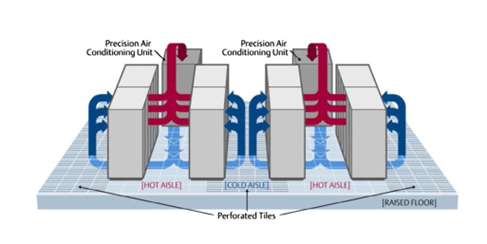
Data centre ventilation example [Cho, Lim, Kim 2009]
In maritime engineering, simulation is used to analyse hull resistance, propeller performance, exhaust gas flow, and heat transfer in complex systems. Using advanced CFD methods, engineers can evaluate these behaviours under realistic conditions, where physical testing is limited and scaling effects are prohibitive. This enables faster design optimisation, reduces development costs, and shortens time to market.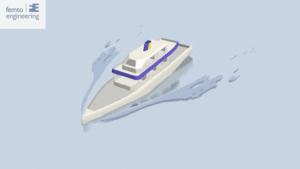
In maritime engineering, simulation is used to analyse hull resistance, propeller performance, exhaust gas flow, and heat transfer in complex systems.
Across these examples, the pattern is consistent: simulation enhances engineering workflows by replacing guesswork with insight, reducing reliance on costly prototypes, and enabling decisions to be made with greater confidence.
Simulation should no longer be viewed as a specialised capability, but as a vital part of modern engineering practice.
For decision-makers, the priority is not simply adoption, but integration at the right stage of the process. The greatest value is achieved when simulation is applied early, where it can actively shape design choices rather than validate them afterwards.
Focusing on high-impact areas, where uncertainty, cost, or risk is greatest, provides a practical starting point. In more complex cases, collaboration with a specialised CAE consultancy or engineering partner can accelerate implementation and ensure reliable outcomes.
In an environment defined by increasing complexity, the ability to replace assumptions with validated insight is not just a technical advantage. It is a strategic necessity.
At Femto Engineering, we see simulation not as a technical add-on, but as a strategic capability that delivers the most value when applied early. While it reduces prototyping cost and effort, its true impact lies in guiding design decisions before changes become expensive.
As an experienced CAE consultancy, we partner with engineering teams from early concept exploration to design optimisation and final validation, ensuring simulation delivers impact where it matters most. With over 30 years of experience, we combine advanced simulation tools with deep engineering expertise to turn complex physics into clear, reliable decisions.
Every engineering challenge is different, yet simulation can contribute to most. Feel free to reach out to explore how it can support your specific case.
Planning to optimize a design? Let us help you certify it with confidence.
Do you need more information or want to discuss your project? Reach out to us anytime and we’ll happily answer your questions.
At Femto Engineering we help companies achieve their innovation ambitions with engineering consultancy, software, and R&D.
We are Siemens DISW Expert Partner for Simcenter Femap, Simcenter 3D, Simcenter Amesim, Simcenter STAR-CCM+, SDC verifier, Altair HyperWorks, Altair SimSolid and Altair PhysicsAI. Get in touch and let us make CAE work for you.
Sign up for our newsletter to get free resources, news and updates monthly in your inbox. Share in our expertise!